
Criminal Court Records in Richmond County
A Richmond County criminal court record is the case file maintained once a criminal matter moves into court. It is not the same thing as the first arrest entry. The court record may begin with an accusation, indictment, complaint, or other charging document, then add docket entries as the case moves through arraignment, motions, hearings, plea talks, trial settings, disposition, and sentencing. The Clerk of Superior, State & Juvenile Court is the main records office for Superior, State, and Juvenile Court case files in Richmond County. Civil and Magistrate Court keeps separate lower-court records, including warrant application matters.
The court level matters. Superior Court is Georgia's general-jurisdiction trial court and is the key Richmond County venue for felony criminal cases. State Court of Richmond County handles misdemeanors and traffic violations, as well as civil actions not reserved to Superior Court. The District Attorney handles felony prosecution for the Augusta Judicial Circuit, while the Solicitor General is the practical contact for current misdemeanor and traffic case status. Booking status belongs with the sheriff and jail, so custody questions should be checked through Richmond County inmate records, while the court outcome belongs in the criminal case file.
For all case types, the downtown court campus is centered at the Augusta-Richmond County Judicial Center and John H. Ruffin, Jr. Courthouse, 735 James Brown Boulevard, Augusta, Georgia 30901. Suite numbers matter because the clerk, District Attorney, State Court, Civil and Magistrate Court, and other offices serve different functions. A felony docket, misdemeanor case-status call, certified-copy request, and warrant inquiry can all involve the same building area but different counters.
How to Search Richmond County Criminal Court Records
The official court-record search path starts with the Case Management Search gateway. That page requires users to read a disclaimer before selecting "Yes I Agree" to open the case-management application. The disclaimer is important because Augusta does not certify the authenticity or accuracy of online results and does not provide warranties for use of the data. Online case results are useful for locating a Richmond County criminal court record, but certified copies must come from the court custodian.
- Open the Richmond County Case Management Search page and read the disclaimer before entering the application.
- Search with the strongest identifier available, such as case number, defendant name, court name, or known offense date.
- Confirm whether the case belongs in Superior Court for a felony or State Court for a misdemeanor or traffic offense.
- Open the docket to review charges, motions, plea entries, disposition, sentence, and any appeal or probation terms shown.
- For certified copies or missing documents, contact the Clerk of Superior, State & Juvenile Court at 735 James Brown Boulevard, Suite 1500, Augusta, GA 30901, phone (706) 821-2460.
Current State Court misdemeanor or traffic case-status questions may also route through the Solicitor General's court-information process. The official Solicitor page says callers should have the defendant's first and last name, date of birth if known, a brief charge description, offense date, case number, and the court where the case is pending. That phone route is useful when the public search does not show enough detail or when a court date is close. The State Court automated phone line is 706-432-5499, and Solicitor case questions are directed to (706) 821-1220.
The Georgia Courts e-access page provides a statewide court-case access route that redirects to a provider and states that an account is required. State-prison custody or offender records are different from court files and belong with the Georgia Department of Corrections offender query. Federal cases are not Richmond County court records; they use PACER, federal CM/ECF, and federal court systems.
The District Attorney source page helps explain who represents the State in felony cases. The District Attorney's Office for the Augusta Judicial Circuit prosecutes felony matters in Richmond and Burke counties, while State Court misdemeanor and traffic matters involve the Solicitor General. The District Attorney profile page identifies Jared Williams as District Attorney for the circuit.
The District Attorney profile is one official source for Richmond County felony prosecution context: see the DA profile page.
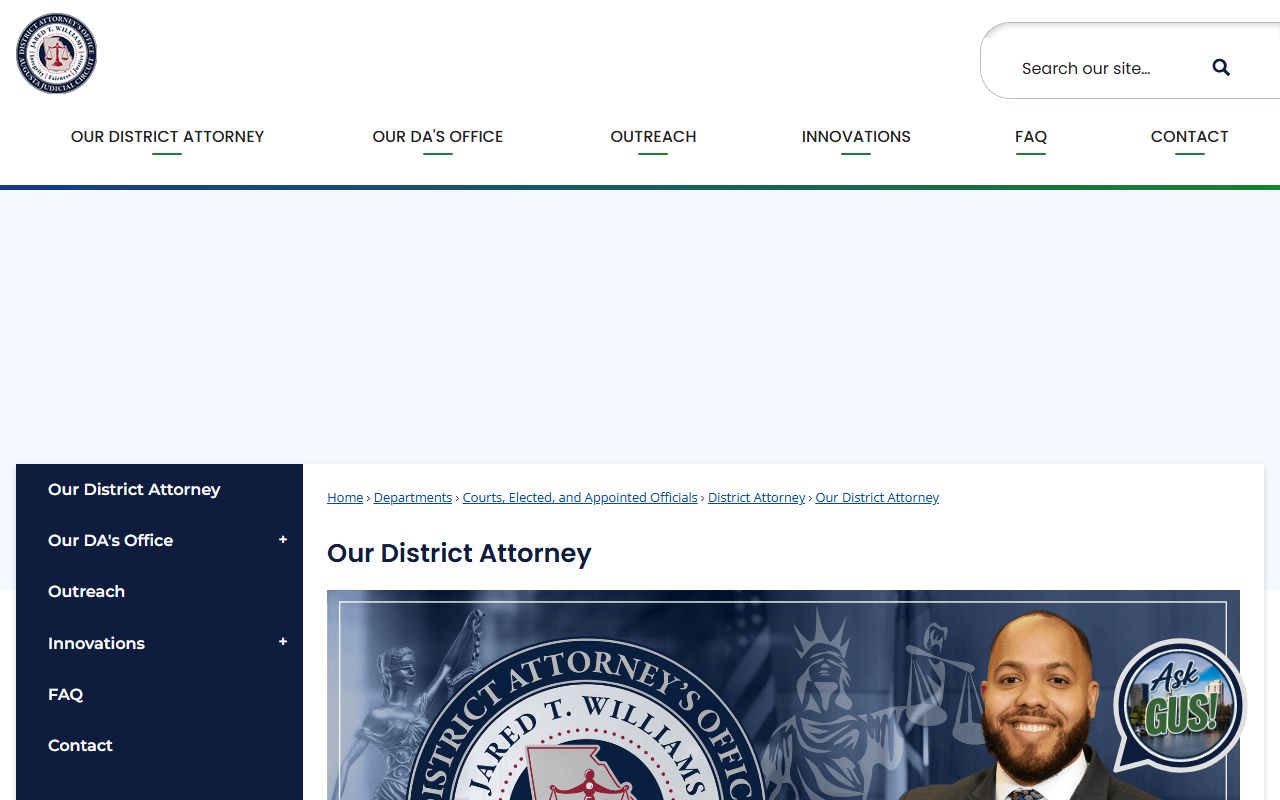
That office context matters because felony charges in a Richmond County criminal court record are prosecuted by the Augusta Judicial Circuit District Attorney, not by the jail roster.
Stages of a Criminal Case
A Richmond County criminal court record grows over time. Early entries may only show a charging document and first appearance or arraignment. Later entries can show motions, continuances, subpoenas, plea paperwork, verdict, sentence, probation terms, fines, and notices. A single case may also show several charges, and each charge may have its own outcome. That is why a full criminal case file is broader than court charges after arrest.
Case flow: Charges Filed › Arraignment › Pretrial / Motions › Plea or Trial › Disposition › Sentencing
| Stage | What Happens |
|---|---|
| Charges filed | The prosecutor or grand jury charge enters the court record. Felony matters usually route to Superior Court; misdemeanor and traffic matters usually route to State Court. |
| Arraignment | The defendant is formally called before the court, the charge is addressed, and a plea may be entered or scheduled. |
| Pretrial / motions | The docket may show discovery disputes, continuances, bond issues, suppression motions, treatment-court referral, or other case events. |
| Plea or trial | The record may show a negotiated plea, bench or jury trial, verdict, dismissal, nolle prosequi, or acquittal. |
| Disposition and sentence | The final charge outcome, sentence, probation, fines, jail or prison term, and court costs may be entered. |
Richmond County has treatment-court options at both felony and misdemeanor levels. The Superior Court page lists an Augusta Circuit Drug Court Program as a sentencing alternative for felony drug or drug-related charges. State Court Accountability and Treatment Courts materials describe misdemeanor-focused DUI Multi-Offender Court and Veterans Court services. If treatment court is part of a criminal case, docket entries may show referral, monitoring, fees, or completion events rather than a simple guilty-or-dismissed line.
The District Attorney office role is described by Augusta's official DA office page: review the felony prosecution office source.
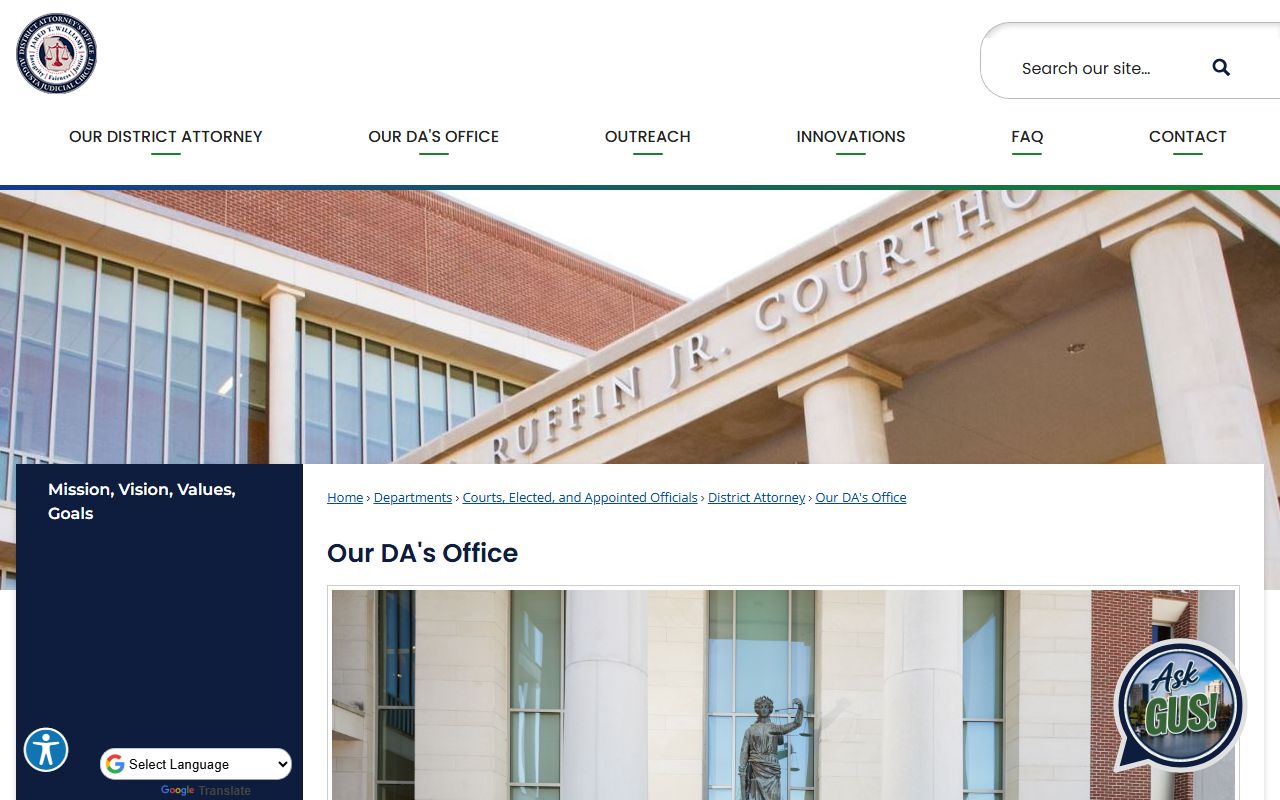
This source reinforces the distinction between the prosecutor's felony role and the clerk's role as custodian of the court case record.
What a Richmond County Criminal Court Record Shows
Richmond County criminal court records can contain both docket data and documents. A docket entry is a dated event in the case. A document is the filing itself, such as an indictment, accusation, motion, order, plea form, sentence, or notice. Public online searches may show docket-level data first. The full court file, certified copies, or older documents may require contact with the Clerk of Superior, State & Juvenile Court.
| Field | What It Shows |
|---|---|
| Case number | The court's file number, used by the clerk, court staff, attorneys, and public users to locate the case. |
| Court name | Superior Court, State Court, Magistrate Court, or another venue connected to the criminal matter. |
| Defendant | The person charged by the State, sometimes with date of birth or other identifiers restricted from public view. |
| Charges | The offense text, charge count, statute reference when shown, and any amended, reduced, or dismissed charge entries. |
| Docket events | Arraignment, motions, continuances, hearing notices, trial settings, orders, warrants, pleas, and judgments. |
| Disposition | The outcome of each charge, such as guilty, dismissed, nolle prosequi, acquitted, or sentenced. |
| Sentence | Jail, prison, probation, fines, costs, conditions, treatment court, or other sanctions ordered after conviction. |
| Redactions | Social Security numbers, minor information, sealed charges, juvenile data, and restricted identifiers may be removed. |
Some criminal-record questions are really custody questions. If the issue is whether a person is currently in the Richmond County Jail or was recently booked, use the sheriff's inmate inquiry rather than the court docket. If the issue is whether a formal charge ended in conviction, dismissal, plea, or sentence, use the criminal court record. If the issue is whether an active warrant still exists, start with the official warrant channels described in Richmond County warrant records.
Charges vs. Convictions
Being charged is not the same as being convicted. A Richmond County criminal court record can list charges that were later reduced, dismissed, dropped by nolle prosequi, or resolved by acquittal. It can also list several charges from one arrest with different results. Read the disposition for each count instead of treating the first charge list as the final outcome.
| Charge | Conviction | |
|---|---|---|
| Stage | Filed early in the case by accusation, indictment, complaint, or citation. | Entered after a guilty plea, guilty verdict, or other final adjudication. |
| Meaning | The State alleges an offense occurred. | The court record shows the charge was proved or admitted. |
| Record impact | May remain visible unless restricted or sealed. | May affect sentence, probation, custody, fines, and criminal-history reporting. |
| Best source | Charging document and docket entries. | Disposition, sentence, judgment, or final order. |
Reading Dispositions and Sentences
A disposition is the outcome of a charge or case. Common outcomes include guilty, not guilty, dismissed, nolle prosequi, or sentenced. A nolle prosequi entry means the prosecutor chose not to proceed on that charge. A sentence is the punishment or condition imposed after conviction. In a Richmond County criminal court record, the sentence can include jail, prison, probation, fines, court costs, treatment-court requirements, or other court-ordered terms.
Read disposition and sentence lines by charge count. One case may have Count 1 dismissed, Count 2 amended, and Count 3 resolved by plea. A booking list may show the original charge text, but the court record is where the final outcome should be verified. Georgia.gov offender guidance explains that adult offenders can be searched in GDC databases, while county jail inmates require the county website.
State offender information is separate from the Richmond County criminal court record. The GDC source is still useful after sentence: open the Georgia Department of Corrections offender query.
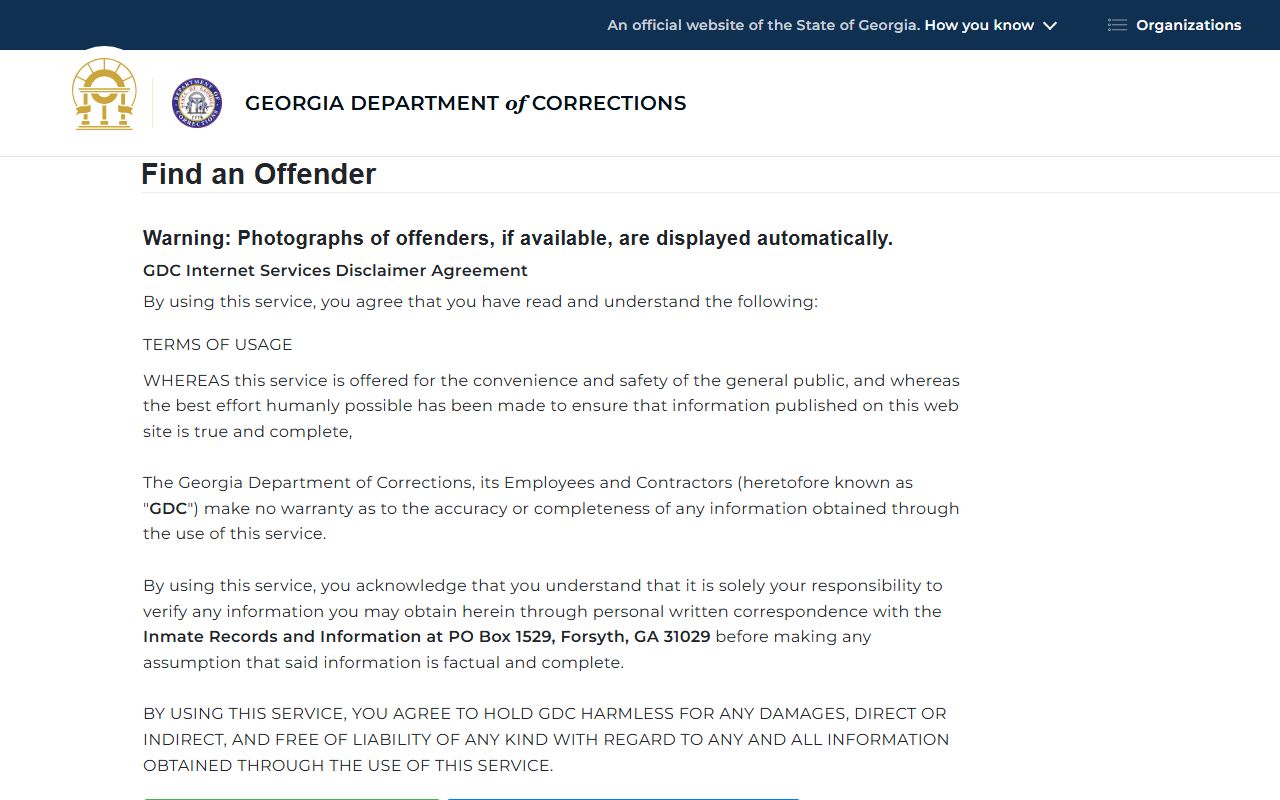
Use the GDC query for state-prison custody, and use the Richmond County case file for the court disposition that led to custody.
Sealed vs. Expunged Records
Georgia commonly uses the term record restriction for eligible criminal-history limits. A restricted record is hidden from ordinary public dissemination, but it is not destroyed and can remain available to judicial officials and criminal justice agencies. A sealed court file is also different from a restricted criminal-history record because court access can require a separate court order or rule-based sealing process.
| Sealed | Expunged | |
|---|---|---|
| Georgia term to watch | Sealing may apply to court access by law or order. | Record restriction is the key Georgia criminal-history term. |
| Public visibility | Hidden or limited for public inspection. | Restricted from public criminal-history dissemination when approved. |
| Who may still see it | Courts, parties, or agencies allowed by law or order. | Judicial officials and criminal justice agencies may still have access. |
| Where to start | Identify the court file and ask the clerk or attorney about the controlling order. | Use GBI and Georgia.gov record-restriction guidance for eligibility and routing. |
For Richmond County charges, the route can depend on date of arrest, charge, arresting agency, prosecutor, and disposition. The GBI record restriction page cites O.C.G.A. § 35-3-37. Georgia.gov also provides a record restriction service overview. Juvenile records, adoption records, and mental-health proceedings are more restricted than ordinary adult criminal case files.
The Public Defender page is relevant for eligible defendants seeking representation in covered Richmond County criminal and traffic matters: review the Augusta Judicial Circuit Public Defender source.
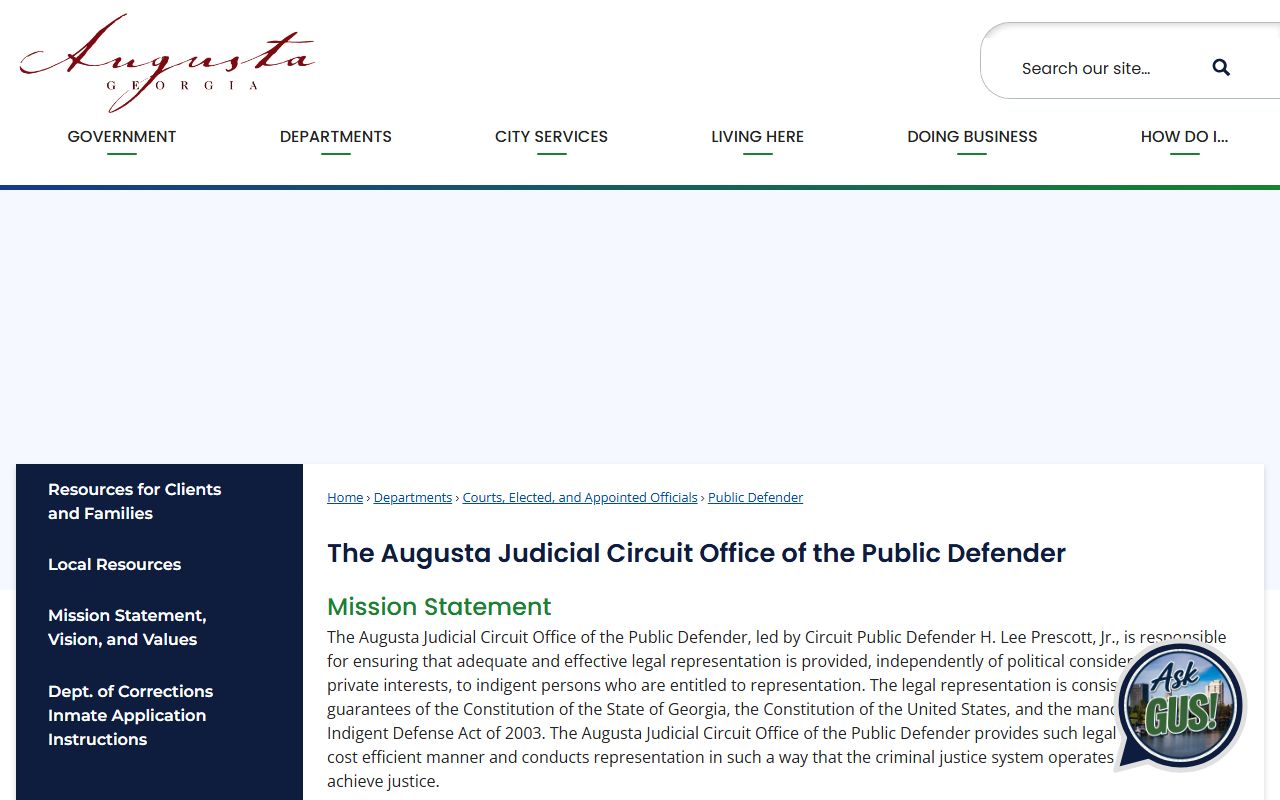
That source helps route people who need legal help interpreting a criminal court record, potential restriction, or pending case.
Public Access to Criminal Court Records
Richmond County criminal court records are generally public unless a statute, court rule, or court order restricts access. Georgia's Open Records Act supports public access to agency records, while court-file access is also shaped by court rules and sealing law. Uniform Superior Court Rule 21 addresses public access to Superior Court records unless limited by law or sealing procedure. Online records should be treated as informational, not as certified copies.
Key Statutes:
O.C.G.A. § 50-18-70 gives Georgia public records a strong presumption of openness unless law makes them confidential.
O.C.G.A. § 50-18-71 covers request procedures, response timing, and lawful copying or search charges.
O.C.G.A. § 35-3-37 governs Georgia criminal-history record restriction for eligible records.
Federal criminal cases do not sit in Richmond County's local court search. Use PACER, the Southern District of Georgia CM/ECF system, and the U.S. District Court for the Southern District of Georgia for federal district court records. Federal custody after conviction uses the Federal Bureau of Prisons inmate locator.
The Federal Bureau of Prisons locator is useful only for federal custody, not for Richmond County criminal court records: view the BOP source.
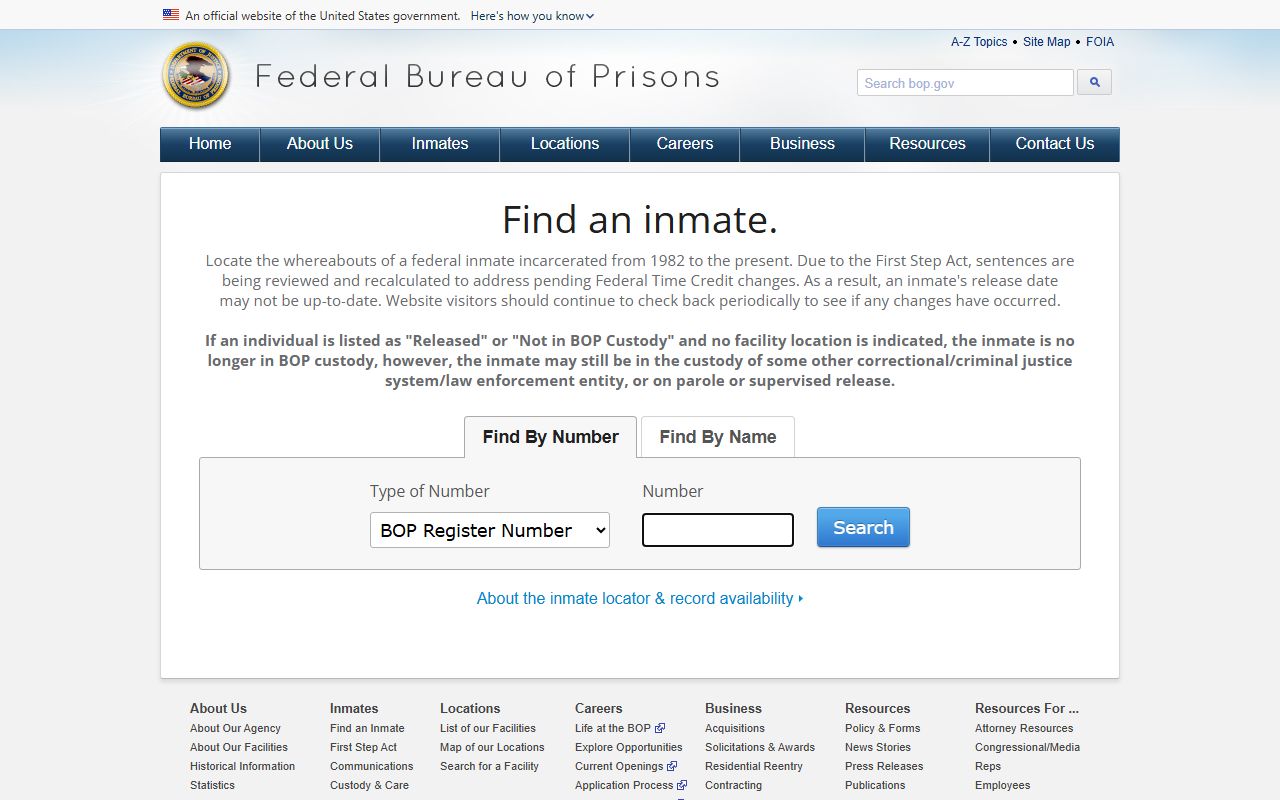
This federal custody source prevents a local case search from being confused with federal prison placement or federal release status.
Background Check Considerations
A Richmond County criminal court record search is a public-record lookup, not a consumer background report. Employers, landlords, insurers, lenders, and other regulated users must follow the Fair Credit Reporting Act and any other laws that apply to their use case. A casual case search can help someone understand a docket or locate the correct court file, but it should not be treated as a complete criminal-history report.
Important: Public case lookup is not an FCRA consumer report and may omit sealed, restricted, or non-court data.
Restricted Criminal Court Records in Richmond County
Restricted Richmond County criminal court records include juvenile matters, sealed files, restricted criminal-history information, adoption-related records, mental-health proceedings, and redacted personal identifiers. Juvenile Court serves delinquent, unruly, and deprived children under 17, but juvenile records are not ordinary public adult criminal files. Adoption records are also confidential under Georgia law. Probate mental-health matters and sensitive identifiers such as Social Security numbers or bank-account numbers should not be expected in public displays.
If a public search result is missing a document, the absence may reflect redaction, sealed access, an older non-digitized file, a separate custodian, or a case that belongs in a different court. Start with the case number and court name, then contact the custodian. For Superior, State, and Juvenile records, that is the Clerk of Superior, State & Juvenile Court. For sheriff booking, jail, incident, or warrant materials, use the Sheriff's Office or Warrant Division instead of the court clerk.