
Richmond County Arrest Records and Court Charges
Richmond County arrest records come from the sheriff, police, jail, or other arresting agency. They may show the person arrested, arrest date, booking number, age, race, sex, current charge text, bond amount when listed, and charge disposition fields that may still be blank. The Richmond County Sheriff's Office inmate inquiry is the public booking path for current and recent county-jail custody. That booking path is useful, but it is not the full court file and does not prove a final conviction.
Court charges after arrest are the formal allegations pursued through the court system. In Richmond County, felonies generally route to Superior Court and the Augusta Judicial Circuit District Attorney, while misdemeanors and traffic offenses route through State Court and the Solicitor General. The Richmond County criminal court record is where the filed charges, docket events, pleas, disposition, and sentence are read together. For booking and custody status, use inmate records; for all court-file access channels, use court records.
The same arrest can produce more than one charge. A charge can also change. It may be amended, reduced, dismissed, or marked nolle prosequi, which means the prosecutor chose not to proceed. A booking list can lag behind the court result or show the original arrest charge after the court charge has changed. The safest reading starts with custody status, then checks the court file for the formal charging document and final disposition.
How to Find Richmond County Arrest Records and Charges
Use two official tracks. For booking status, start with the Richmond County Sheriff's Office Inmate Inquiry. Active bookings load automatically, and the recent-bookings button loads recent entries. For the charge record in court, start with Augusta's Case Management Search gateway or contact the court office that handles the case. The online case gateway requires a disclaimer acknowledgement before the search application opens.
- Check the inmate inquiry if the question is whether the person is currently booked or recently booked in the Richmond County jail system.
- Search the court case-management path by defendant name or case number when the question is what charges were filed in court.
- Confirm the court level: Superior Court for felony matters, State Court for misdemeanor and traffic matters, and Civil or Magistrate Court for warrant applications or lower-court process.
- Read each charge separately, then compare the charge list with the docket, disposition, plea, dismissal, or sentencing entry.
- Request certified charge or disposition copies from the correct clerk if the online result is not enough for a legal filing.
The State Court of Richmond County page lists court access for misdemeanor and traffic matters. The Solicitor court-information page says people asking about current case status should have the defendant's name, date of birth if known, charge description, offense date, case number, and court name. Felony prosecution context comes from the Augusta Judicial Circuit District Attorney's Office, which represents the State in felony matters for Burke and Richmond counties.
The State Court landing page is a direct local source for Richmond County misdemeanor and traffic charge routing: view the State Court source.
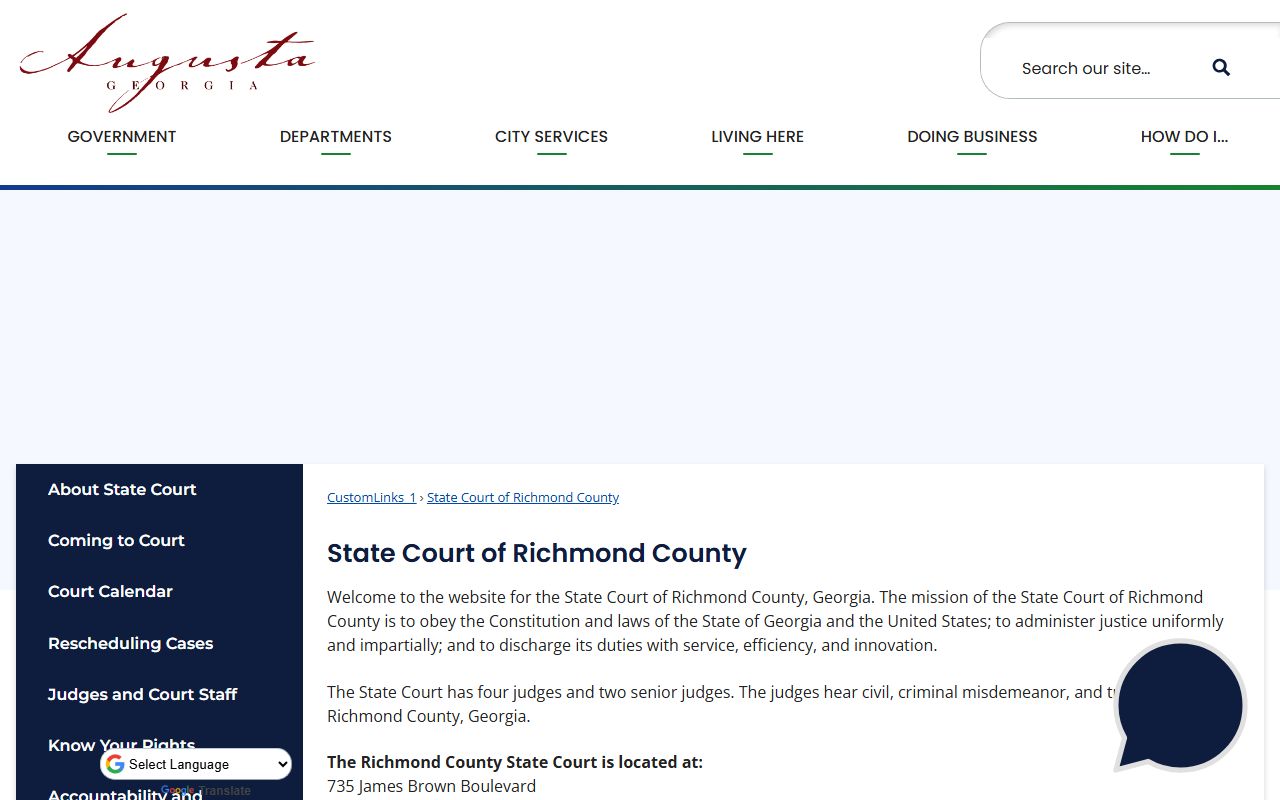
That court source helps separate county-level State Court charges from statewide databases and from jail booking records.
Charges After Arrest
An arrest starts with law-enforcement action. A court charge starts when the allegation is brought into a court file through a complaint, accusation, indictment, citation, or similar charging document. Richmond County felony charges are tied to Superior Court authority and the District Attorney. State Court handles misdemeanor and traffic violations, and treatment-court materials show State Court programs for misdemeanor defendants with substance-abuse issues.
| Document | Common Richmond County Use | What to Check |
|---|---|---|
| Complaint or citation | Often tied to an officer-initiated charge, misdemeanor, traffic, or lower-court starting point. | Look for offense date, charge text, court date, and issuing agency. |
| Accusation or information | A prosecutor-filed charging document that can start or refine the court charge. | Check whether it replaces an initial arrest charge or changes the charge level. |
| Indictment | A grand-jury charging document, usually connected to felony prosecution in Superior Court. | Read each count and compare it with the docket disposition. |
Some cases begin with a booking charge that is broad or preliminary. Later, the prosecutor may choose a different formal charge, add counts, reduce a count, or decline to proceed. That is why the court charge record matters. It is the bridge between the initial arrest record and the full criminal case file.
Richmond County State Court treatment-court materials are relevant when charges after arrest involve misdemeanor substance-abuse programs: review the Accountability and Treatment Courts source.
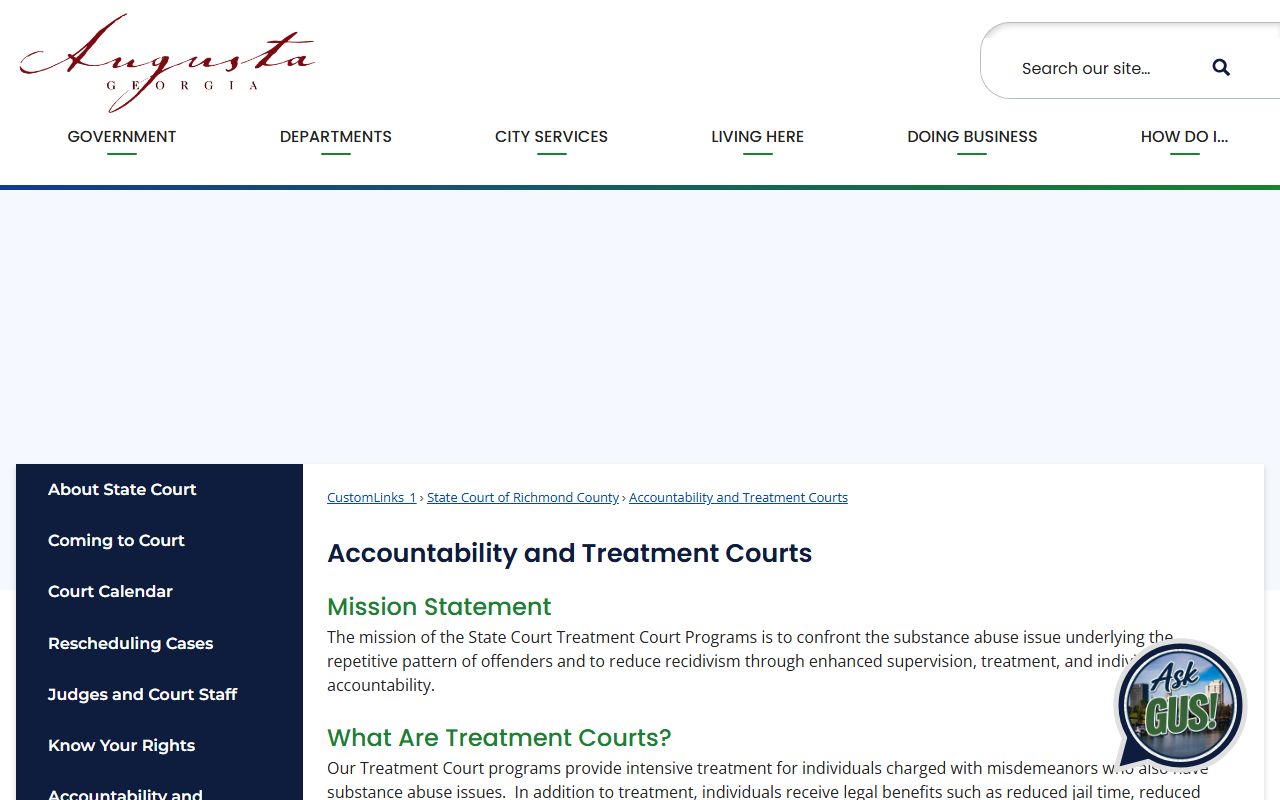
Treatment-court eligibility can affect how a charge moves through State Court, but it does not turn an arrest record into a conviction.
Charge Status and What It Means
A charge status is the current or final position of a specific charge. It is not always the same as case status. A case may be open while one count is dismissed and another count remains pending. Richmond County court records and booking details can show a disposition field, but an empty field should not be read as proof of guilt or innocence. Use the filed court record and final court order for the most reliable status.
| Status | What It Means |
|---|---|
| Pending | The charge has not reached a final court outcome, or the online record does not yet show one. |
| Amended | The charge text, count, or severity changed after the first filing. |
| Reduced | The charge was lowered to a lesser offense or lower severity level. |
| Dismissed | The court record shows the charge was ended without conviction on that count. |
| Nolle prosequi | The prosecutor chose not to proceed on the charge. |
| Sentenced | The charge ended in conviction or plea and a sentence was entered. |
Charges tied to state-prison custody may also appear in state systems after sentencing. The Georgia Department of Corrections Richmond County Jail location page is not a substitute for court-charge records, but state and county custody systems can help route custody questions after arrest.
The GDC Richmond County Jail location source is useful for custody routing, not for final court-charge outcomes: view the GDC location source.
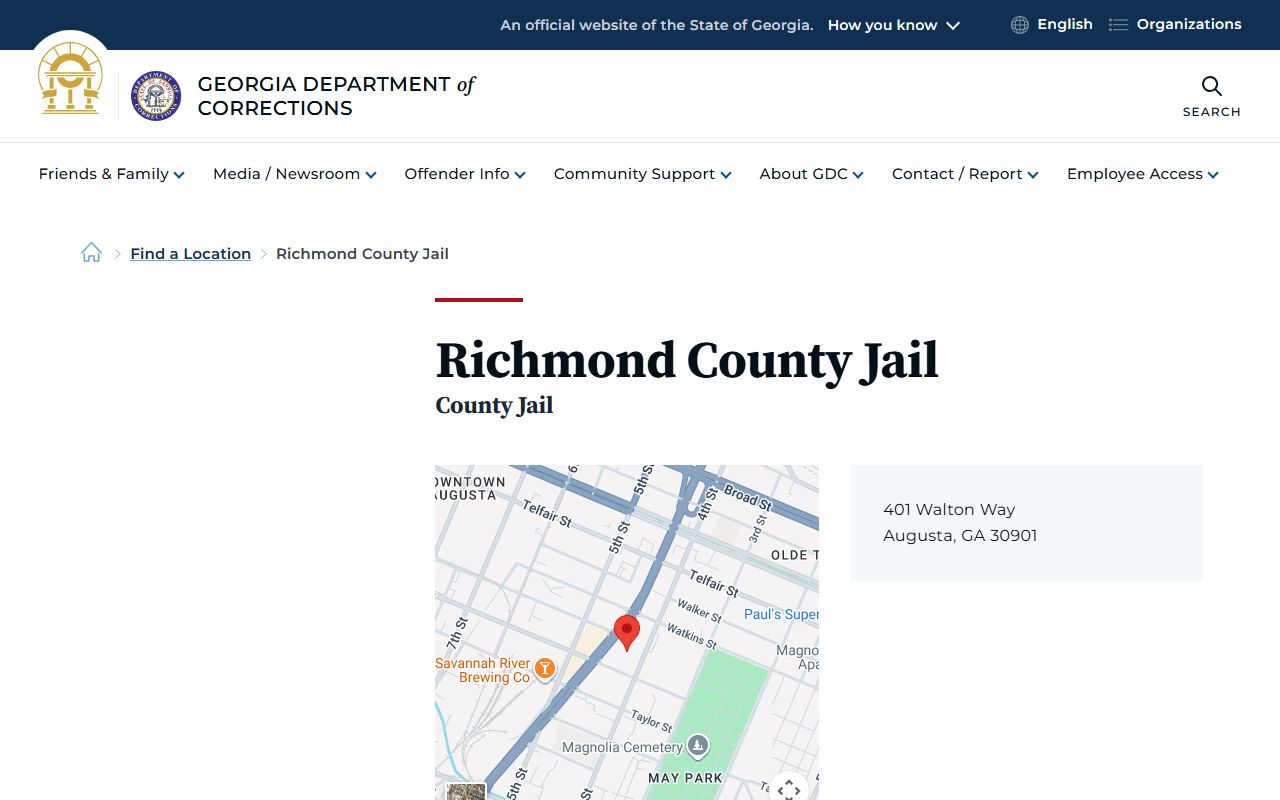
Use custody sources to locate the person, then use court records to verify what happened to each formal charge.
Charges vs. Convictions
A charge is an allegation. A conviction is a court outcome. Richmond County arrest records can show charge text before any final ruling. A Richmond County court charge record can later show that the same charge was amended, dropped, dismissed, or resolved by plea or verdict. Read the outcome column, not just the arrest charge.
| Charge | Conviction | |
|---|---|---|
| Stage | Appears early after arrest or formal filing. | Appears after plea, verdict, or final adjudication. |
| Meaning | The State alleges the offense. | The court accepted or found guilt for the offense. |
| Where to verify | Booking record, charging document, and docket entries. | Disposition, sentence, judgment, and certified court copies. |
| Common mistake | Treating a booking charge as a final finding. | Assuming every charge in a case led to conviction. |
Sealed vs. Expunged Records
Georgia's main public-facing term is record restriction. The GBI criminal history record restriction page cites O.C.G.A. § 35-3-37 and explains that restriction can limit public access to eligible criminal-history information. Georgia.gov also explains that restricted records are hidden or sealed from the public but are not destroyed. A court file may need separate attention from criminal-history dissemination.
| Sealed | Expunged | |
|---|---|---|
| Georgia framing | Court access may be sealed or limited by order or law. | Record restriction is the common Georgia criminal-history route. |
| Public effect | Public access to the file or charge may be limited. | Eligible criminal-history information is restricted from public use. |
| Still available to | Courts, parties, or agencies allowed by the order or statute. | Judicial officials and criminal justice agencies in many cases. |
| Starting point | Identify the court file and ask the clerk or counsel about sealing. | Identify arrest date, arresting agency, charge, prosecutor, and disposition. |
For arrests after July 1, 2013, GBI guidance says there is no application process and the person must contact the prosecutor to have the record restricted. For arrests before July 1, 2013, the person must apply at the arresting agency. Richmond County felony restriction questions may involve the District Attorney; misdemeanor and traffic matters may involve the Solicitor General. Juvenile charges, adoption matters, and some sensitive proceedings are not public in the same way as adult charge records.
The GBI page is the official state source for Georgia criminal-history restriction: review the GBI record restriction source.
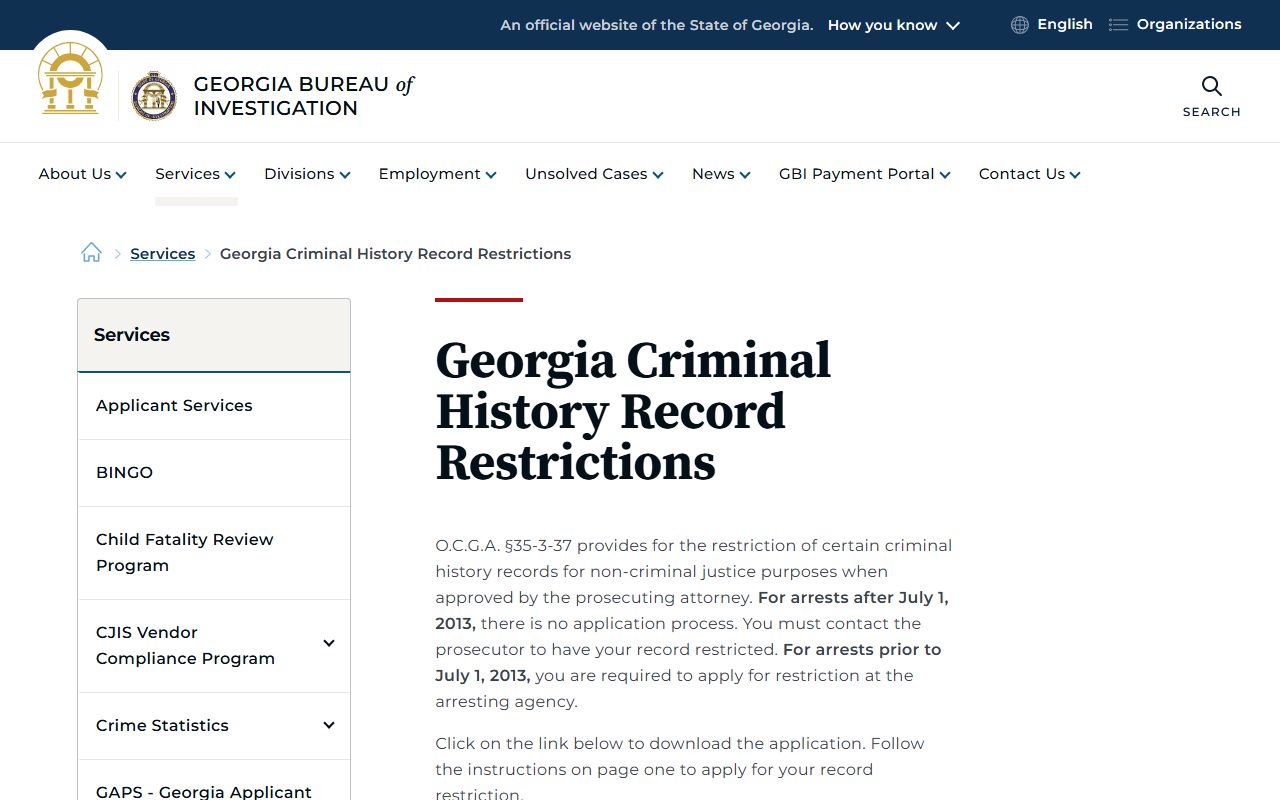
That state source prevents overpromising that one local request can erase every public trace of an arrest or charge.
Charge Codes and Severity Levels
Charge text may refer to an offense label, statute, count number, warrant label, or court category. Richmond County research identifies felony matters with Superior Court and misdemeanor or traffic matters with State Court. Magistrate and Civil Court functions can also create warrant-application records and related lower-court process. A person may see "grand jury arrest warrant" in a booking detail, but the court record must be checked to learn whether a felony indictment, dismissal, plea, or sentence followed.
Georgia court names can be confusing. State Court is a county-level trial court, not a statewide database. Superior Court is the general-jurisdiction trial court for felonies. Magistrate Court is a lower court for smaller civil claims, warrant applications, dispossessory actions, and related process. That naming distinction matters when searching charge records because a charge tied to State Court will not always follow the same route as a Superior Court felony case.
Statewide Charge and Criminal History Lookups
Statewide criminal-history and custody tools serve different needs from Richmond County arrest records. The Georgia.gov record restriction service page explains restriction routes for eligible records. The Georgia Courts record restriction self-help page gives court-facing information. The GDC offender query is for state-prison offenders, not current county-jail booking records.
Georgia.gov is a statewide source for restriction requests and should be used alongside Richmond County court and prosecutor records: open the Georgia.gov restriction source.
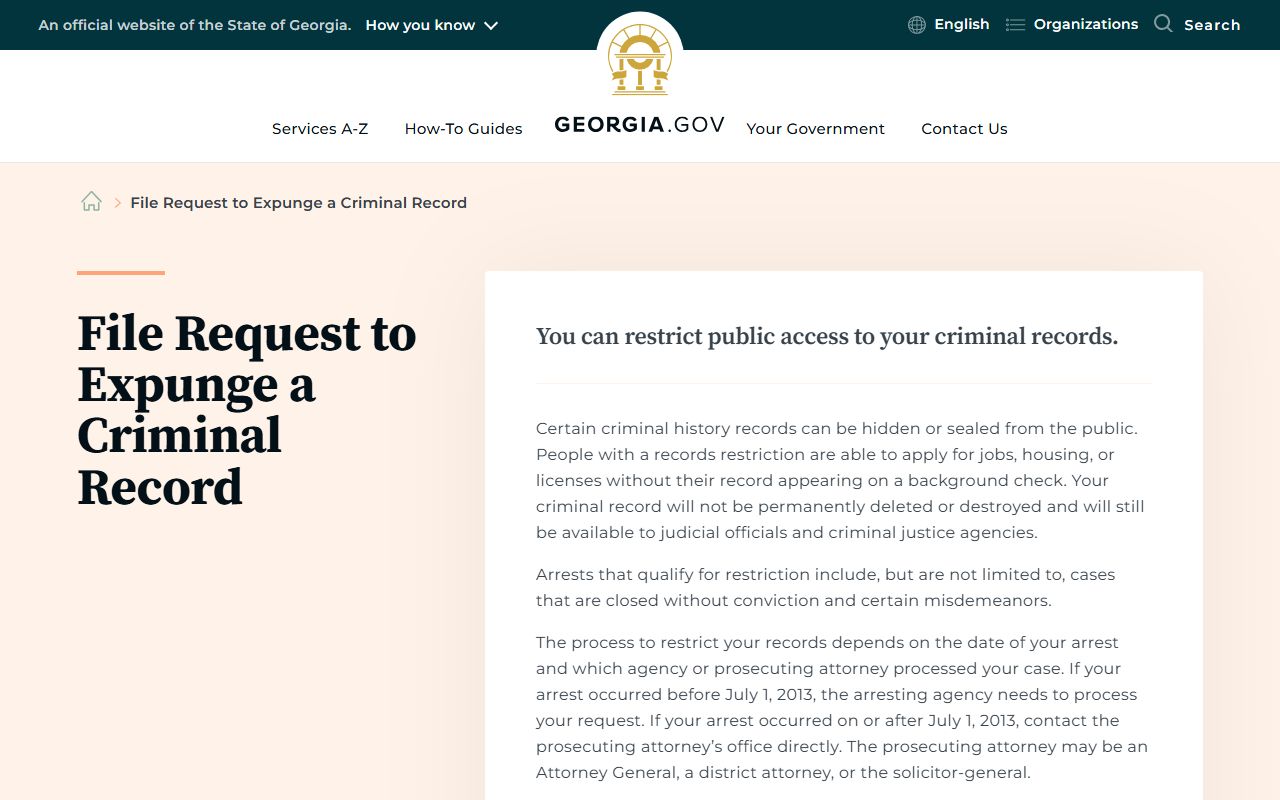
State restriction guidance helps after the Richmond County charge outcome is known, especially when a dismissal or non-conviction may qualify.
Georgia Courts also maintains a self-help resource on restriction and expungement issues: view the Georgia Courts record restriction self-help source.
That court-system source supports people comparing arrest records, charge records, and public-access limits after a case ends.
Background Check Considerations
A Richmond County arrest records lookup is not the same as a complete criminal-history report. Arrest records may show an allegation before any prosecutor or judge reaches a final outcome. Court charges after arrest may show more precise filed charges, but they still require disposition review. Regulated background checks for employment, housing, credit, insurance, or other FCRA-covered purposes require compliant consumer-reporting procedures and should not rely on casual web lookup alone.
Important: Do not treat an arrest charge as a conviction without checking the final Richmond County court disposition.
Restricted Charge Records in Richmond County
Restricted charge records include juvenile matters, sealed court records, adoption-related files, mental-health proceedings, redacted personal identifiers, and eligible restricted criminal-history information. The public may also see less detail when an investigation is active or when the court file contains sensitive data. Georgia's Open Records Act supports public-record requests, but it does not override every confidentiality rule that applies to court files, juvenile records, or criminal-history restriction.
If the charge is missing from a public system, first decide which custodian should hold it. Court charges belong with the relevant court clerk. Booking and jail entries belong with the Sheriff's Office. Warrant application records may route through the Civil and Magistrate Court Warrant Division. State-prison records belong with GDC. Federal cases and federal custody do not use Richmond County court or jail systems.